Follow Me On Pinterest!


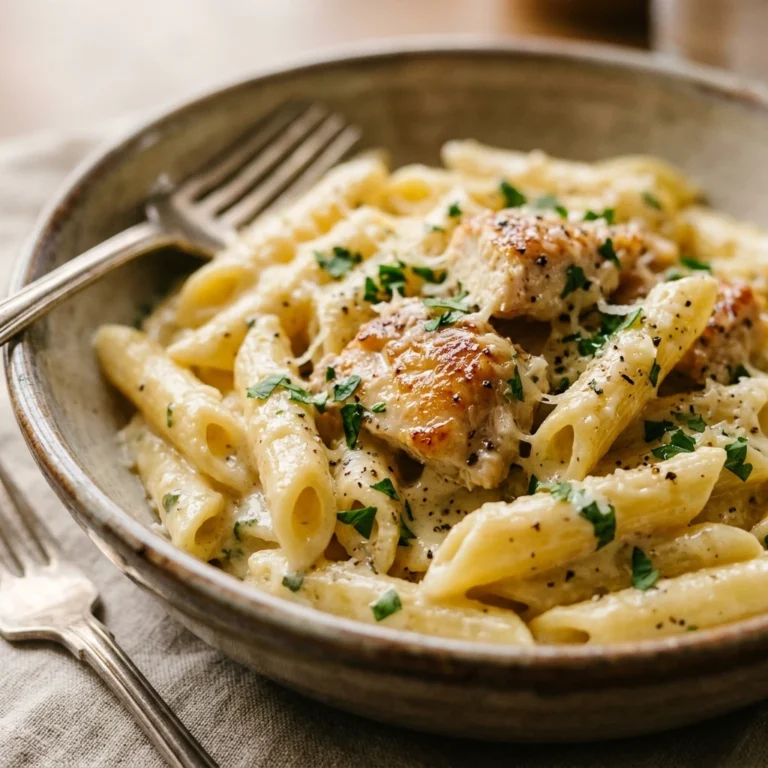
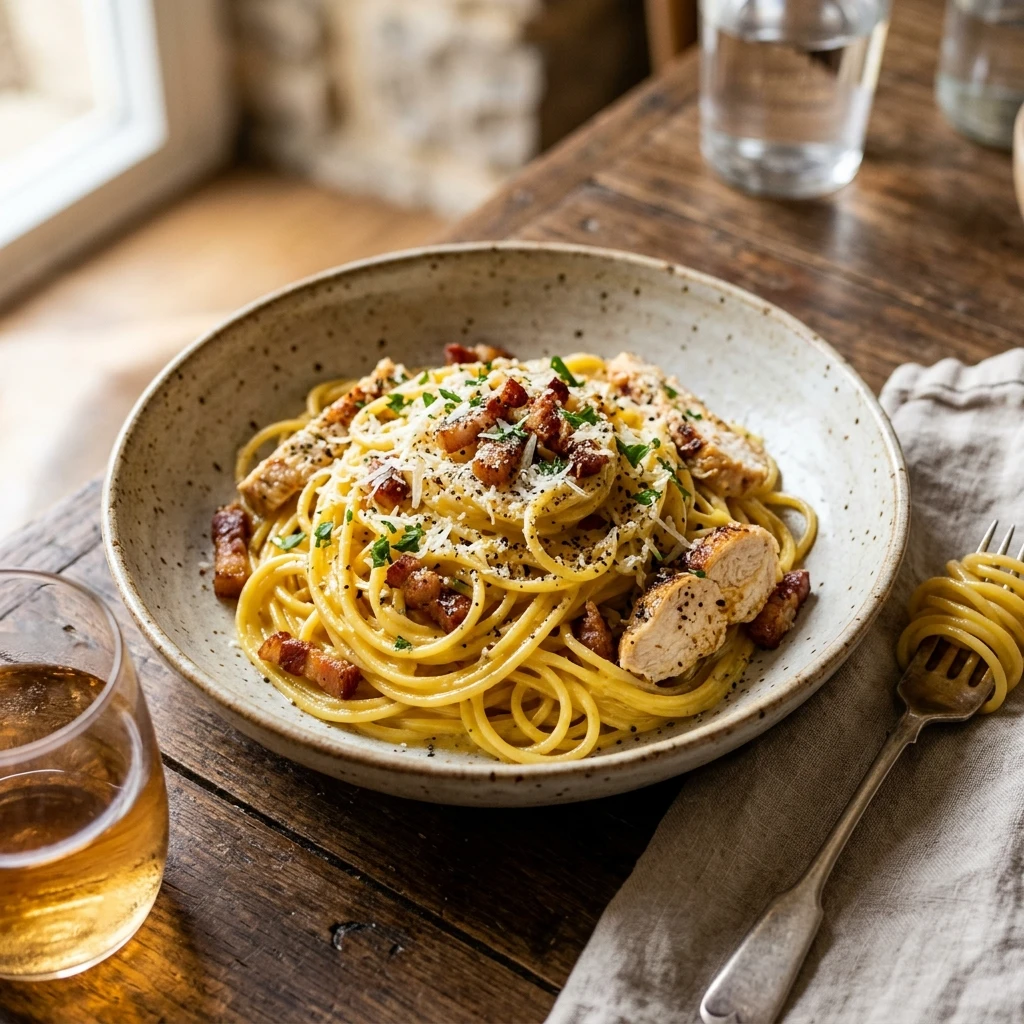
Forget the heavy, store-bought creams that mask the true flavors of Italian cuisine. Authentic Chicken Carbonara Pasta is a masterclass in simplicity, relying on the magic of high-quality eggs and sharp Pecorino Romano to create a glossy, velvet-like sauce. This version respects the Roman tradition while adding succulent pieces of pan-seared chicken for an extra protein boost. If you have ever struggled with scrambled eggs in your pasta or a sauce that feels too dry, this guide will help you master the “no-cream” technique. Get ready to experience a restaurant-quality meal that feels incredibly indulgent yet uses only a handful of pantry staples.
Recipe Information
- Prep Time: 15 minutes
- Cook Time: 20 minutes
- Total Time: 35 minutes
- Servings: 4 servings
- Difficulty: Medium
Nutrition values
- Calories: 645 kcal
- Protein: 42g
- Carbs: 58g
Why Make This Chicken Carbonara Pasta For No Cream Authentic
Most modern recipes cheat by adding heavy cream, which dulls the salty, peppery profile of a true Carbonara. By following this authentic method, you create a sauce that is naturally emulsified, light on the palate, and incredibly rich in flavor. Adding chicken makes this a complete, one-pan-style meal that satisfies the biggest appetites. It is the perfect recipe for those who want to improve their culinary skills and understand the science of pasta water and egg emulsions. Plus, it tastes significantly better than any “cheat” version you have tried before.
Ingredients
- 1 lb (450g) Spaghetti or Bucatini
- 2 large Chicken breasts, cubed into bite-sized pieces
- 4 oz (115g) Guanciale or thick-cut Pancetta, diced
- 3 large Eggs + 1 Egg yolk (room temperature)
- 1 cup freshly grated Pecorino Romano cheese (or Parmesan)
- 2 teaspoons freshly cracked black pepper
- 2 cloves Garlic, smashed (optional for the chicken)
- Salt for pasta water
- 1 tablespoon Olive oil
Directions
Step 1: Prep the Egg Mixture and Chicken
In a medium mixing bowl, whisk together the three whole eggs and one egg yolk. Stir in the grated Pecorino Romano cheese and the cracked black pepper until it forms a thick paste. Set this aside. Season your cubed chicken breasts with a small pinch of salt and pepper. Because the cheese and pork are salty, go light on the extra salt for the chicken.
Step 2: Boil the Pasta
Bring a large pot of heavily salted water to a boil. Add the spaghetti and cook according to the package instructions until “al dente” (firm to the bite). Crucial Step: Reserve at least one cup of the starchy pasta water before draining the noodles. Do not skip this, as the water is the secret to the creamy texture.
Step 3: Crisp the Meat and Cook the Chicken
While the pasta boils, heat a large skillet or pan over medium heat with a splash of olive oil. Add the guanciale or pancetta and cook until the fat renders and the meat becomes crispy and golden. Use a slotted spoon to remove the pork, leaving the rendered fat in the pan. Add the chicken cubes (and garlic if using) to that same pan. Sauté the chicken in the pork fat over medium-high heat until cooked through and slightly browned. Remove the garlic cloves and add the crispy pork back into the pan with the chicken.
Step 4: The Emulsion (Creating the Sauce)
Turn the heat off completely under the skillet containing the chicken and pork. Add the drained, hot pasta directly into the skillet. Toss the pasta to coat every strand in the rendered fat. Now, quickly pour in the egg and cheese mixture while tossing the pasta constantly with tongs or a pasta fork. Gradually add splashes of the reserved pasta water. The residual heat from the pasta and pan will cook the eggs into a creamy sauce without scrambling them. Keep tossing until the sauce is glossy and coats the noodles perfectly.
Step 5: Plating
Serve the pasta immediately while it is hot and creamy. Garnish with an extra sprinkle of Pecorino Romano and another dusting of freshly cracked black pepper. If the sauce thickens too much as it sits, add another teaspoon of warm pasta water to loosen it up before serving.
Expert Tips for Perfect Chicken Carbonara Pasta For No Cream Authentic
The most important rule is to avoid direct heat once the eggs are added. If the pan is too hot, you will end up with breakfast scrambled eggs rather than a smooth sauce. Always use room-temperature eggs to prevent “thermal shock” when they hit the hot pasta. Additionally, use freshly grated cheese; pre-shredded cheeses are coated in potato starch, which prevents them from melting smoothly into the sauce. Finally, be generous with the black pepper—it provides the signature bite that cuts through the richness of the egg yolks.
Delicious Variations
- Spicy Carbonara: Add a teaspoon of red chili flakes to the rendered pork fat for a heat kick.
- Vegetable Twist: Stir in some frozen peas or sautéed mushrooms along with the chicken for extra texture.
- Sea-Carbonara: Replace the chicken with large shrimp or scallops for a sophisticated seafood version.
- Cheese Swap: If Pecorino Romano is too salty for you, use a 50/50 mix of Pecorino and Parmigiano-Reggiano.
Frequently Asked Questions
Can I use bacon instead of guanciale?
Yes! While guanciale (cured pork jowl) is traditional, thick-cut smoked bacon is a great substitute and is much easier to find in most grocery stores.
Why did my sauce turn out clumpy?
Clumping usually happens if the heat is too high. Make sure to turn off the burner and let the pan cool for 30 seconds before adding the egg mixture. Constant stirring is key!
Can I reheat leftovers?
Carbonara is best eaten immediately. If you must reheat it, do so very gently over a low flame with a splash of water or milk to loosen the sauce. Avoid the microwave, as it will scramble the eggs.
Is the raw egg safe to eat?
The eggs are not technically raw; the residual heat of the pasta (which is roughly 200°F) “cooks” the eggs to a safe temperature while maintaining a liquid state. If you are concerned, use pasteurized eggs.
What is the best pasta shape for this?
Long, thin noodles like spaghetti, linguine, or bucatini are best because they provide more surface area for the sauce to cling to. Short shapes like rigatoni also work well for trapping bits of chicken and pork.
Conclusion
Mastering the authentic Chicken Carbonara is a rite of passage for any home cook. By ditching the cream and mastering the egg-and-pasta-water emulsion, you unlock a level of flavor that is truly world-class. This dish is fast enough for a Tuesday night but elegant enough for a dinner party. Give it a try, keep your tongs moving, and enjoy the rich, peppery reward of a true Italian classic.
Chicken Carbonara Pasta For No Cream Authentic
- Total Time: 35 minutes
- Diet: High-Protein
Ingredients
Scale
- 1 lb (450g) Spaghetti or Bucatini
- 2 large Chicken breasts, cubed into bite-sized pieces
- 4 oz (115g) Guanciale or thick-cut Pancetta, diced
- 3 large Eggs + 1 Egg yolk (room temperature)
- 1 cup freshly grated Pecorino Romano cheese (or Parmesan)
- 2 teaspoons freshly cracked black pepper
- 2 cloves Garlic, smashed (optional for the chicken)
- Salt for pasta water
- 1 tablespoon Olive oil
Instructions
- Step 1: Prep the Egg Mixture and Chicken
In a medium mixing bowl, whisk together the three whole eggs and one egg yolk. Stir in the grated Pecorino Romano cheese and the cracked black pepper until it forms a thick paste. Set this aside. Season your cubed chicken breasts with a small pinch of salt and pepper. Because the cheese and pork are salty, go light on the extra salt for the chicken. - Step 2: Boil the Pasta
Bring a large pot of heavily salted water to a boil. Add the spaghetti and cook according to the package instructions until “al dente” (firm to the bite). Crucial Step: Reserve at least one cup of the starchy pasta water before draining the noodles. Do not skip this, as the water is the secret to the creamy texture. - Step 3: Crisp the Meat and Cook the Chicken
While the pasta boils, heat a large skillet or pan over medium heat with a splash of olive oil. Add the guanciale or pancetta and cook until the fat renders and the meat becomes crispy and golden. Use a slotted spoon to remove the pork, leaving the rendered fat in the pan. Add the chicken cubes (and garlic if using) to that same pan. Sauté the chicken in the pork fat over medium-high heat until cooked through and slightly browned. Remove the garlic cloves and add the crispy pork back into the pan with the chicken. - Step 4: The Emulsion (Creating the Sauce)
Turn the heat off completely under the skillet containing the chicken and pork. Add the drained, hot pasta directly into the skillet. Toss the pasta to coat every strand in the rendered fat. Now, quickly pour in the egg and cheese mixture while tossing the pasta constantly with tongs or a pasta fork. Gradually add splashes of the reserved pasta water. The residual heat from the pasta and pan will cook the eggs into a creamy sauce without scrambling them. Keep tossing until the sauce is glossy and coats the noodles perfectly. - Step 5: Plating
Serve the pasta immediately while it is hot and creamy. Garnish with an extra sprinkle of Pecorino Romano and another dusting of freshly cracked black pepper. If the sauce thickens too much as it sits, add another teaspoon of warm pasta water to loosen it up before serving.
- Cook Time: 35 minutes