Follow Me On Pinterest!


Making a cheesecake at home often feels like a high-stakes baking challenge. You worry about the dreaded crack down the middle or a texture that is too grainy or too soft. I am here to tell you that you can bake a bakery-quality, silky-smooth cheesecake right in your own kitchen without any stress. This guide breaks down the process into simple, manageable steps that guarantee success for even the most hesitant beginners. Get ready to impress your friends and family with a dessert that looks as perfect as it tastes.
Recipe Information
- Prep Time: 30 minutes
- Cook Time: 1 hour 15 minutes
- Total Time: 1 hour 45 minutes
- Servings: 12 servings
- Difficulty: Easy
Nutrition values
- Calories: 440 kcal
- Protein: 7g
- Carbs: 32g
Why Make This Every Cheesecake Recipe For Beginners No Cracks
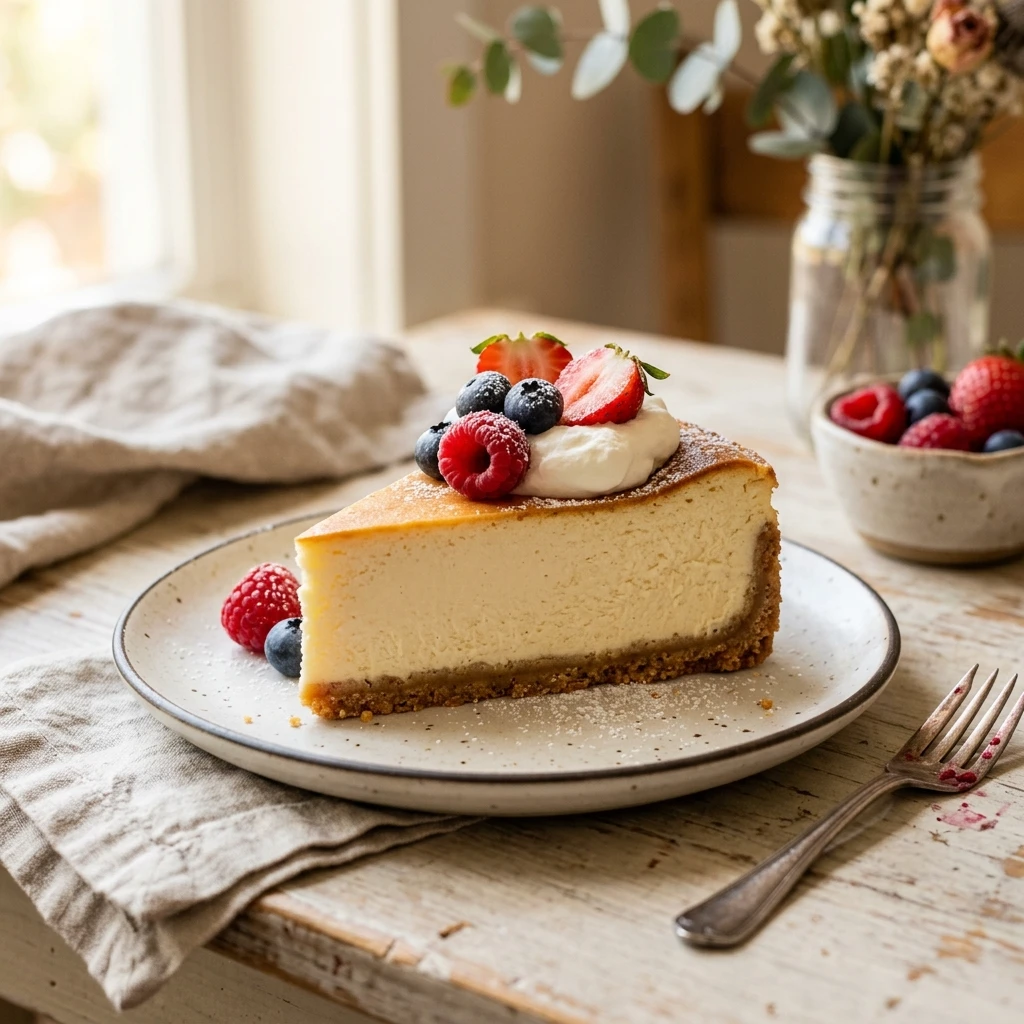
This recipe is the ultimate roadmap for anyone who has ever been intimidated by springform pans and water baths. It focuses on the specific techniques that prevent cracking, such as using room temperature ingredients and a slow cooling process. You do not need fancy equipment or professional training to achieve a dense, creamy, and flawless finish. By following this method, you eliminate the guesswork and ensure a beautiful result every single time you bake.
Ingredients
- 1 ½ cups Graham cracker crumbs
- 1/4 cup granulated sugar (for crust)
- 6 tablespoons unsalted butter, melted
- 32 ounces cream cheese (4 blocks), softened to room temperature
- 1 cup granulated sugar (for filling)
- 1 cup full-fat sour cream, room temperature
- 1 tablespoon vanilla extract
- 4 large eggs, room temperature
- Optional: Fresh berries or fruit compote for topping
Directions
Step 1: Prepare the Crust
Preheat your oven to 350°F (175°C). In a medium bowl, stir together the Graham cracker crumbs, 1/4 cup sugar, and melted butter until the mixture looks like wet sand. Press the mixture firmly into the bottom and slightly up the sides of a 9-inch springform pan. Bake the crust for 10 minutes, then remove it from the oven and let it cool completely while you prepare the filling.
Step 2: Mix the Cream Cheese Base
Lower the oven temperature to 325°F (160°C). In a large bowl or stand mixer, beat the softened cream cheese and 1 cup of sugar on medium speed until the mixture is completely smooth and creamy. Scrape down the sides of the bowl to ensure no lumps remain. Add the sour cream and vanilla extract, then mix again until well combined. Consistency is key here, so take your time to ensure a lump-free base.
Step 3: Incorporate the Eggs Gently
Turn the mixer to low speed. Add the eggs one at a time, mixing just until each egg is incorporated. Do not overmix the batter at this stage, as overmixing introduces air bubbles that cause the cheesecake to rise and then crack as it cools. Once the eggs are barely blended in, stop the mixer and give the batter one final gentle stir with a spatula.
Step 4: Prepare the Water Bath and Bake
Wrap the outside of your cooled springform pan in two layers of heavy-duty aluminum foil to prevent water from leaking in. Place the pan inside a larger roasting pan. Pour the cheesecake batter over the crust. Place the roasting pan in the oven and carefully pour boiling water into the roasting pan until it reaches halfway up the sides of the springform pan. Bake for 75 minutes, or until the edges are set but the center still has a slight jiggle.
Step 5: Cool Gradually to Prevent Cracks
Turn off the oven and crack the oven door open about an inch. Leave the cheesecake inside the oven for one hour to cool slowly. This gradual temperature change is the secret to a crack-free surface. After an hour, remove the cheesecake from the water bath, take off the foil, and let it cool completely on a wire rack. Refrigerate the cheesecake for at least 6 hours, or preferably overnight, before serving.
Expert Tips for Perfect Every Cheesecake Recipe For Beginners No Cracks
The most important tip is to ensure every single ingredient is at room temperature before you start. Cold cream cheese leads to lumps, and cold eggs can cause the fat in the cheese to seize. Another pro tip is to avoid opening the oven door during the first hour of baking. Constant temperature is your best friend. Finally, always use full-fat ingredients; the fat content provides the structural integrity and creamy mouthfeel that defines a great cheesecake.
Delicious Variations
Once you master the base recipe, the possibilities are endless. You can swap the Graham cracker crumbs for crushed chocolate sandwich cookies to make an Oreo cheesecake. Stir in a half-cup of pumpkin puree and a teaspoon of cinnamon for a fall-themed treat. If you love fruit, swirl a few tablespoons of raspberry jam into the batter before baking. You can also add a layer of ganache on top once the cake has cooled to create a decadent chocolate-topped version.
Frequently Asked Questions
What if I don’t have a roasting pan for a water bath?
If you lack a large roasting pan, you can place a pan filled with boiling water on the rack directly beneath the cheesecake. This creates a moist environment that helps prevent cracking, though a true water bath is still the most reliable method for even heat distribution.
How do I know exactly when the cheesecake is finished baking?
Perform the “jiggle test.” Use a kitchen mitt to gently shake the pan. The edges should be firm and slightly puffed, but a 2-inch circle in the center should still wobble like Jell-O. It will firm up completely as it cools in the refrigerator.
Why did my crust turn out soggy?
Soggy crusts usually happen because water leaked through the aluminum foil during the water bath. Ensure you use heavy-duty foil and wrap it high up the sides. For extra protection, you can place the springform pan inside a slightly larger silicone cake pan before putting it in the water bath.
Can I make this cheesecake in advance?
Yes, cheesecake is actually better when made in advance! It needs at least 6 to 8 hours to set properly in the fridge. You can make it up to two days before you plan to serve it, which makes it an excellent choice for parties and holidays.
Can I freeze leftover cheesecake?
Absolutely. Cheesecake freezes beautifully. Wrap individual slices or the whole cake tightly in plastic wrap and then a layer of foil. It will stay fresh in the freezer for up to three months. Thaw it in the refrigerator overnight before eating.
Conclusion
Baking the perfect cheesecake is a rewarding experience that yields a truly decadent dessert. By following these beginner-friendly steps and focusing on the cooling process, you can say goodbye to unsightly cracks and hello to a smooth, professional-looking cake. Remember to be patient during the cooling phase, as it is just as important as the baking itself. Grab your ingredients, take your time, and enjoy the creamy, delicious results of your hard work!
Every Cheesecake Recipe For Beginners No Cracks
- Total Time: 1 hour 45 minutes
- Diet: Vegetarian
Ingredients
Scale
- 1 ½ cups Graham cracker crumbs
- 1/4 cup granulated sugar (for crust)
- 6 tablespoons unsalted butter, melted
- 32 ounces cream cheese (4 blocks), softened to room temperature
- 1 cup granulated sugar (for filling)
- 1 cup full-fat sour cream, room temperature
- 1 tablespoon vanilla extract
- 4 large eggs, room temperature
- Optional: Fresh berries or fruit compote for topping
Instructions
- Preheat your oven to 350°F (175°C). In a medium bowl, stir together the Graham cracker crumbs, 1/4 cup sugar, and melted butter until the mixture looks like wet sand. Press the mixture firmly into the bottom and slightly up the sides of a 9-inch springform pan. Bake the crust for 10 minutes, then remove it from the oven and let it cool completely while you prepare the filling.
- Lower the oven temperature to 325°F (160°C). In a large bowl or stand mixer, beat the softened cream cheese and 1 cup of sugar on medium speed until the mixture is completely smooth and creamy. Scrape down the sides of the bowl to ensure no lumps remain. Add the sour cream and vanilla extract, then mix again until well combined. Consistency is key here, so take your time to ensure a lump-free base.
- Turn the mixer to low speed. Add the eggs one at a time, mixing just until each egg is incorporated. Do not overmix the batter at this stage, as overmixing introduces air bubbles that cause the cheesecake to rise and then crack as it cools. Once the eggs are barely blended in, stop the mixer and give the batter one final gentle stir with a spatula.
- Wrap the outside of your cooled springform pan in two layers of heavy-duty aluminum foil to prevent water from leaking in. Place the pan inside a larger roasting pan. Pour the cheesecake batter over the crust. Place the roasting pan in the oven and carefully pour boiling water into the roasting pan until it reaches halfway up the sides of the springform pan. Bake for 75 minutes, or until the edges are set but the center still has a slight jiggle.
- Turn off the oven and crack the oven door open about an inch. Leave the cheesecake inside the oven for one hour to cool slowly. This gradual temperature change is the secret to a crack-free surface. After an hour, remove the cheesecake from the water bath, take off the foil, and let it cool completely on a wire rack. Refrigerate the cheesecake for at least 6 hours, or preferably overnight, before serving.
- Cook Time: 1 hour 45 minutes