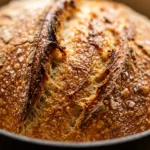
Ingredients
Scale
- 3 cups All-purpose flour or Bread flour (plus extra for dusting)
- 1 ½ cups Warm water (about 100°F)
- 1 teaspoon Active dry yeast or Instant yeast
- 1 ½ teaspoons Sea salt
Instructions
- In a large mixing bowl, whisk together the flour, salt, and yeast until well combined. Pour the warm water into the center of the dry ingredients. Use a sturdy spoon or a spatula to stir the mixture until a shaggy, sticky ball forms and no dry flour remains. Do not overwork the dough; you just want the ingredients incorporated. Cover the bowl tightly with plastic wrap or a damp kitchen towel.
- Place the bowl in a warm, draft-free spot in your kitchen. Let the dough rest and rise for at least 12 hours, though 18 hours is even better for flavor development. During this time, the yeast will work its magic, creating bubbles and building the gluten structure that kneading usually provides. The dough is ready when it has doubled in size and the surface is covered in tiny bubbles.
- Place your empty Dutch oven (with the lid) into the oven and preheat it to 450°F (230°C). While the oven heats, turn the dough out onto a well-floured piece of parchment paper. Gently fold the edges toward the center to form a rough ball. You don’t need to be perfect here. Let the dough rest on the parchment paper for about 30 minutes while the pot finishes heating up.
- Carefully remove the scorching hot Dutch oven from the oven. Lift the parchment paper by the corners and drop the dough (paper and all) into the pot. Put the lid back on and bake for 30 minutes. The trapped steam will help the bread rise. After 30 minutes, remove the lid and bake for another 15 minutes. This final step allows the crust to brown and become crispy. Remove the bread and let it cool on a wire rack for at least 30 minutes before slicing.
- Cook Time: 50 minutes