

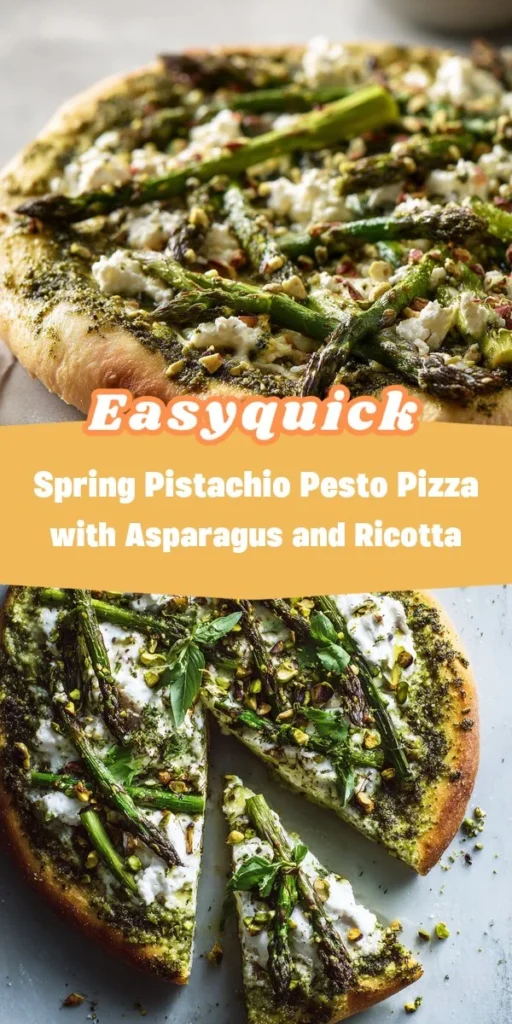
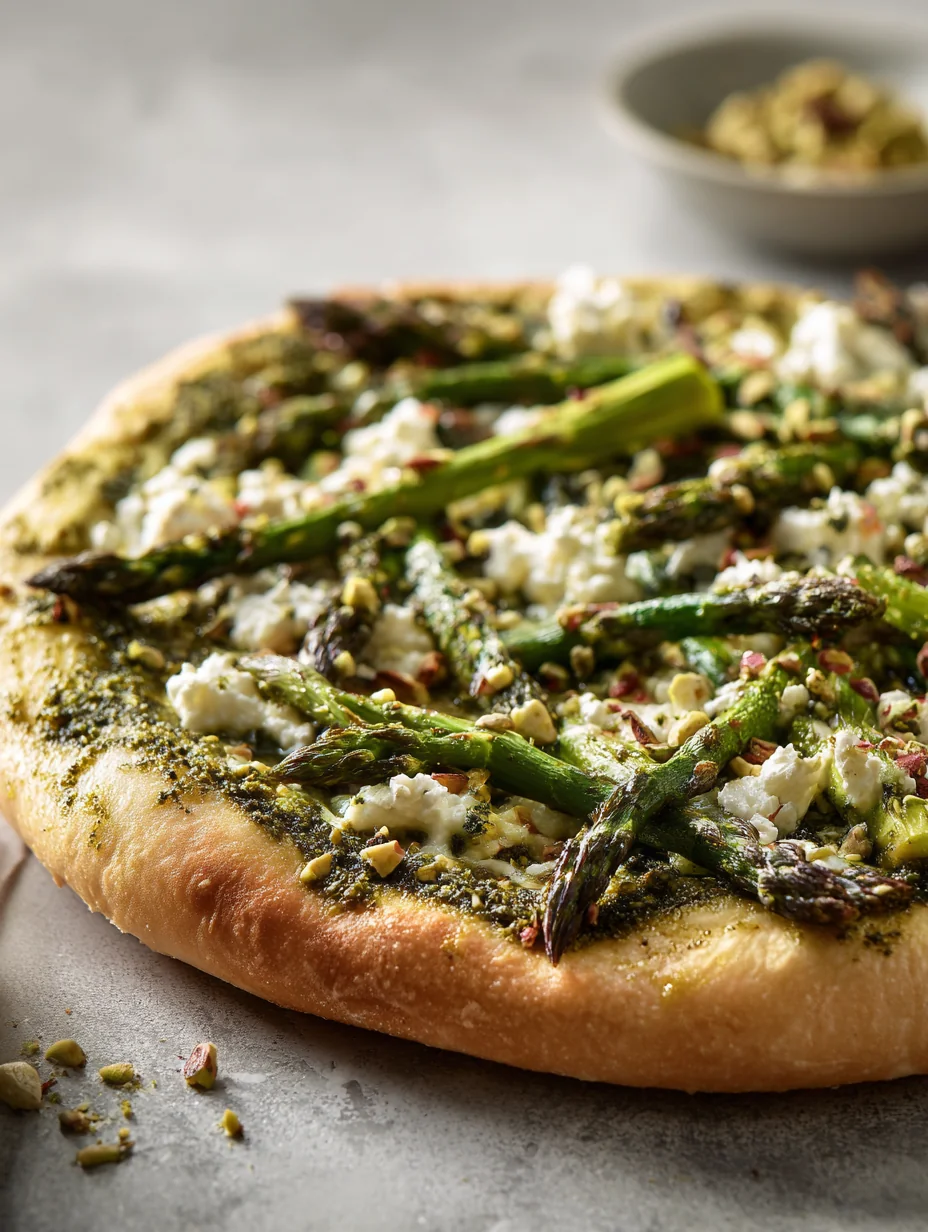
Spring Pistachio Pesto Pizza with Asparagus and Ricotta
About This Recipe
Spring is a season synonymous with renewal and freshness, and what better way to celebrate this vibrant time of year than with a delightful Spring Pistachio Pesto Pizza? This dish is a beautiful medley of flavors and textures, featuring a creamy ricotta base, nutty pistachio pesto, and tender asparagus, all layered on a crispy pizza crust. It’s a colorful and inviting choice that showcases the best of spring produce, making it an excellent option for outdoor gatherings, casual family dinners, or even a relaxing picnic in the park.
As the weather warms and gardens come alive, this pizza captures the essence of the season with its bright flavors and fresh ingredients. The combination of bright green asparagus and aromatic basil in the pesto brings a burst of color and flavor that is sure to impress. Whether you’re looking to impress guests or simply enjoy a delicious meal at home, this pizza is sure to be a hit.
Why You’ll Love This
There are countless reasons to fall in love with this Spring Pistachio Pesto Pizza. First and foremost, the flavor combinations are truly unique. The creamy ricotta provides a rich, luscious base that complements the nutty and herbaceous notes of the pistachio pesto. The asparagus adds a delightful crunch and a touch of earthiness, making each bite a well-rounded experience.
Beyond the delicious flavors, this pizza is packed with health benefits. Basil, a key ingredient in the pesto, is rich in antioxidants and has anti-inflammatory properties. Asparagus is not only low in calories but also a great source of vitamins A, C, E, and K, as well as fiber. Pistachios are loaded with healthy fats, protein, and essential nutrients, making them a nutritious addition to your meal.
Moreover, this recipe is quick and easy to prepare, making it perfect for beginners and busy cooks alike. With just a few simple steps, you can create a gourmet pizza that looks and tastes like it came from a restaurant kitchen.
🥗 Ingredient Breakdown
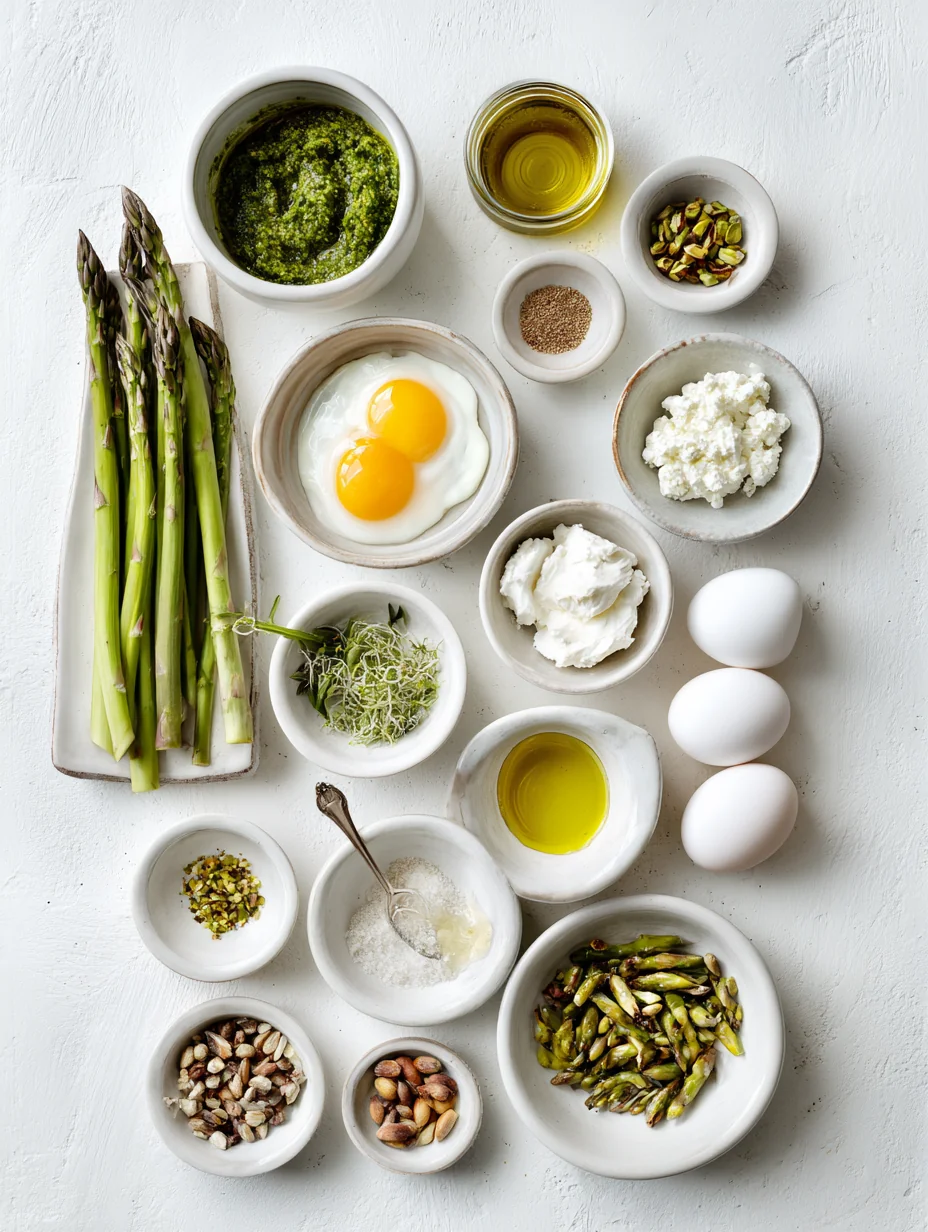
To create the perfect Spring Pistachio Pesto Pizza, it’s essential to understand each ingredient’s role and benefits. Here’s a breakdown of what you’ll need:
Pizza Dough
Overview: The base of any pizza, dough provides the structure and texture.
Pre-made vs. Homemade: You can buy pre-made pizza dough from your local grocery store for convenience. However, making your own dough allows for customization and can be fresher. If you choose to make it at home, you’ll need flour, water, yeast, and salt.
Pistachio Pesto
Ingredients: Traditionally made with fresh basil, garlic, olive oil, Parmesan cheese, and nuts-in this case, pistachios.
Nutritional Benefits: Pistachios are high in protein, fiber, and healthy fats, making them a great nutritional choice. Basil brings flavor and antioxidants to the mix.
Ricotta Cheese
Overview: This creamy cheese is mild in flavor and adds a rich, velvety texture to the pizza.
Nutritional Benefits: Ricotta is a good source of protein and calcium, making it a healthy addition when used in moderation.
Fresh Asparagus
Overview: Adding a touch of spring freshness, asparagus is a key vegetable in this recipe.
Nutritional Benefits: It is low in calories and packed with vitamins, minerals, and antioxidants.
Olive Oil
Overview: Used in both the pesto and for drizzling, olive oil brings healthy fats and enhances flavors.
Nutritional Benefits: Rich in monounsaturated fats and antioxidants, it promotes heart health.
Parmesan Cheese
Overview: This hard cheese adds a salty, nutty flavor to the pesto.
Nutritional Benefits: Parmesan is a good source of protein and calcium, contributing to the overall nutritional profile.
Salt and Pepper
Overview: Essential for enhancing the flavors of all ingredients.
Nutritional Benefits: While necessary in small amounts, it’s important to use salt judiciously to avoid excessive sodium intake.
Ingredient Substitutions
If you need to make substitutions, consider using walnuts or almonds in place of pistachios for the pesto, or try using goat cheese instead of ricotta for a tangier flavor. Whole wheat or gluten-free pizza dough can be used if dietary restrictions are a concern.
Step-by-step Preparation
Now that you’re familiar with the ingredients, let’s dive into the preparation process. Follow these detailed steps to make your Spring Pistachio Pesto Pizza with Asparagus and Ricotta.
Making the Pistachio Pesto
1. Gather Your Equipment: You will need a food processor, a measuring cup, and a spatula for scraping down the sides.
2. Ingredients for Pesto:
- 1 cup fresh basil leaves
- 1/2 cup shelled pistachios
- 2 cloves garlic
- 1/2 cup grated Parmesan cheese
- 1/2 cup olive oil
- Salt and pepper to taste
3. Blend the Pesto:
- In the food processor, combine basil, pistachios, garlic, and Parmesan cheese. Pulse until roughly chopped.
- With the processor running, slowly drizzle in the olive oil until the mixture is smooth and creamy. You may need to stop and scrape down the sides to ensure everything is well blended.
- Season with salt and pepper to taste. Adjust the consistency by adding more olive oil if necessary.
Tips for Pesto: For the perfect pesto consistency, ensure all ingredients are finely chopped but still have some texture. If you have leftovers, store them in an airtight container in the refrigerator, drizzled with a thin layer of olive oil on top to prevent browning.
Preheating the Oven
Before you start assembling the pizza, preheat your oven to 475 degreesF (245 degreesC). This high temperature is crucial for achieving a crispy crust.
Blanching Asparagus
1. Prepare the Asparagus:
- Rinse the asparagus under cold water to remove any dirt. Trim the woody ends (about 1-2 inches from the bottom).
2. Blanching Process:
- Bring a pot of salted water to a rolling boil.
- Add the asparagus and cook for about 2-3 minutes until bright green and slightly tender.
- Immediately transfer the asparagus to an ice bath (a bowl of ice water) to stop the cooking process. This helps maintain the vibrant green color and crisp texture.
Rolling Out Pizza Dough
1. Prepare Your Surface: Lightly flour a clean surface or use parchment paper to prevent sticking.
2. Roll Out the Dough:
- If using pre-made dough, let it sit at room temperature for about 30 minutes to make it easier to work with.
- Using a rolling pin, gently roll out the dough into your desired shape (circle, rectangle, etc.) and thickness. Aim for about 1/4 inch thick to ensure a crispy crust without being too doughy.
Tips for Beginners: Avoid using too much flour while rolling out to prevent the dough from becoming dry. If the dough shrinks back, let it rest for a few minutes before rolling again.
Component Preparation
This recipe’s first steps are now complete, setting you up for success in creating a delicious Spring Pistachio Pesto Pizza. Stay tuned for the next section, where we will assemble and bake this delightful dish!
Assembly & Serving Tips
Assembling your Spring Pistachio Pesto Pizza with Asparagus and Ricotta is the final step that brings this vibrant dish to life. Here’s how to do it like a pro:
1. Preheat Your Oven: Before you start assembling, ensure your oven is preheated to 475 degreesF (245 degreesC). This high temperature is key to achieving a crispy crust.
2. Roll Out the Dough: On a lightly floured surface, roll out your pizza dough to your desired thickness. Aim for a round shape, about 12 inches in diameter. Transfer it onto a baking sheet or a pizza stone lined with parchment paper for easy handling.
3. Spread the Pesto: Using a spoon or a spatula, spread a generous layer of the homemade pistachio pesto over the base of the pizza. Leave about a half-inch border around the edges for the crust. The pesto will act as the sauce, infusing the pizza with flavor.
4. Add the Ricotta: Dollop spoonfuls of ricotta cheese over the pesto. You can either leave the ricotta in larger blobs for a creamy texture or spread it out more evenly if you prefer a milder flavor throughout.
5. Layer the Asparagus: Arrange the blanched asparagus spears evenly over the pizza. You can cut them into smaller pieces if you like, or leave them long for a rustic look.
6. Finish with Cheese: Sprinkle the shredded mozzarella generously over the top to ensure a gooey, cheesy finish. You can also add a sprinkle of Parmesan for extra flavor.
7. Crispy Crust Tips: To achieve a crispy crust, consider using a pizza stone or baking steel if you have one. If using a baking sheet, preheat it in the oven before placing the pizza on it. Bake the pizza for about 12-15 minutes or until the crust is golden brown and the cheese is bubbling.
8. Serving Suggestions: This pizza pairs beautifully with a light arugula salad drizzled with lemon vinaigrette. The peppery arugula complements the rich flavors of the pesto and ricotta. For beverages, try a crisp white wine like Sauvignon Blanc or a light lager to balance the freshness of the ingredients.
Presentation
A beautifully presented pizza can elevate the dining experience significantly. Here are some tips to make your Spring Pistachio Pesto Pizza visually appealing:
1. Garnishing Ideas: After baking, consider garnishing the pizza with fresh basil leaves, a sprinkle of crushed red pepper flakes, or a drizzle of high-quality extra virgin olive oil. A few lemon wedges served alongside can add a bright pop of color and flavor.
2. Serving Style: Decide whether to serve the pizza whole or in individual slices. For a casual gathering, cutting it into slices allows guests to easily grab a piece. For a more formal presentation, serve the pizza whole and let guests slice it themselves.
3. Importance of Presentation: A well-presented dish not only looks inviting but also enhances the overall dining experience. The vibrant greens of the asparagus and basil against the creamy white ricotta and the golden crust create an appealing visual contrast that makes the pizza irresistible.
Variations
One of the joys of cooking is the ability to experiment with flavors. Here are some variations to consider for your Spring Pistachio Pesto Pizza:
1. Alternative Toppings: Depending on the season, feel free to switch up the toppings. Thinly sliced heirloom tomatoes or roasted bell peppers can add another layer of flavor. You could also use seasonal vegetables like zucchini or mushrooms.
2. Add Proteins: For added protein, consider topping your pizza with grilled chicken, shrimp, or even crumbled sausage. These additions can transform the pizza into a heartier meal.
3. Vegetarian Options: If you want to keep it vegetarian, you can add more vegetables or experiment with different cheeses. Feta or goat cheese can provide a tangy contrast to the pesto.
4. Creative Uses for Leftover Pesto: Don’t let leftover pesto go to waste. Use it as a dressing for pasta, spread it on sandwiches, or drizzle it over grilled vegetables for added flavor.
Storage
Storing your Spring Pistachio Pesto Pizza properly is essential for maintaining its flavor and texture. Here’s how:
1. Best Practices for Storing Leftovers: Allow the pizza to cool completely before storing. Wrap it tightly in plastic wrap or foil, or place it in an airtight container.
2. Refrigeration and Freezing: Leftover pizza can be refrigerated for up to 3 days. If you want to keep it longer, you can freeze it. Wrap the pizza in plastic wrap and then in foil, and it will last for up to 3 months in the freezer.
3. Reheating Tips: To reheat pizza and preserve its crispy crust, preheat your oven to 375 degreesF (190 degreesC). Place the pizza directly on the oven rack or on a baking sheet for about 10-15 minutes, or until heated through. Avoid using the microwave, as this can make the crust soggy.
FAQ
Here are some common questions about the Spring Pistachio Pesto Pizza recipe:
1. Can I use a different nut for the pesto?
Yes, while pistachios are recommended for their unique flavor, you can substitute them with walnuts, almonds, or even sunflower seeds for a nut-free option.
2. What if I don’t have fresh basil?
If fresh basil isn’t available, you can use other herbs like spinach, arugula, or parsley for the pesto, though the flavor will differ.
3. How do I know when the pizza is done baking?
The pizza is ready when the crust is golden brown and the cheese is bubbling and slightly browned. You can also lift the crust slightly to check for a crispy texture underneath.
4. Are there gluten-free options or dairy substitutions?
Yes, you can use gluten-free pizza dough available in stores or make your own. For dairy substitutes, try using vegan cheese or omitting the cheese entirely while adding more vegetables for flavor.
Conclusion
The Spring Pistachio Pesto Pizza with Asparagus and Ricotta is not only a feast for the eyes but also a celebration of fresh, seasonal flavors. Its versatility makes it an excellent choice for any occasion, whether it’s a casual weeknight dinner or a festive gathering with friends.
We encourage you to try this recipe and make it your own by experimenting with different toppings, herbs, and flavors. Cooking is about creativity and sharing joy with loved ones, and this pizza is sure to become a new favorite in your culinary repertoire. Enjoy the process and the delicious results!