Follow Me On Pinterest!



A Sweet Symphony of Savory and Sweetness
—
Introduction
The first time I made Caramelized Honey-Glazed Roasted Vegetables, I was bustling around my kitchen, the sounds of laughter and clinking glasses spilling in from the dining room where friends gathered for a cozy dinner. The air was thick with the fragrant aromas of sautéing garlic and freshly roasted vegetables. I remember how the warm, earthy scent of carrots and zucchini mingled with the sweet notes of honey, creating a delightful symphony that danced around my senses. As the vegetables roasted to a beautiful golden brown, I could hardly contain my excitement, knowing that this dish would soon steal the show.
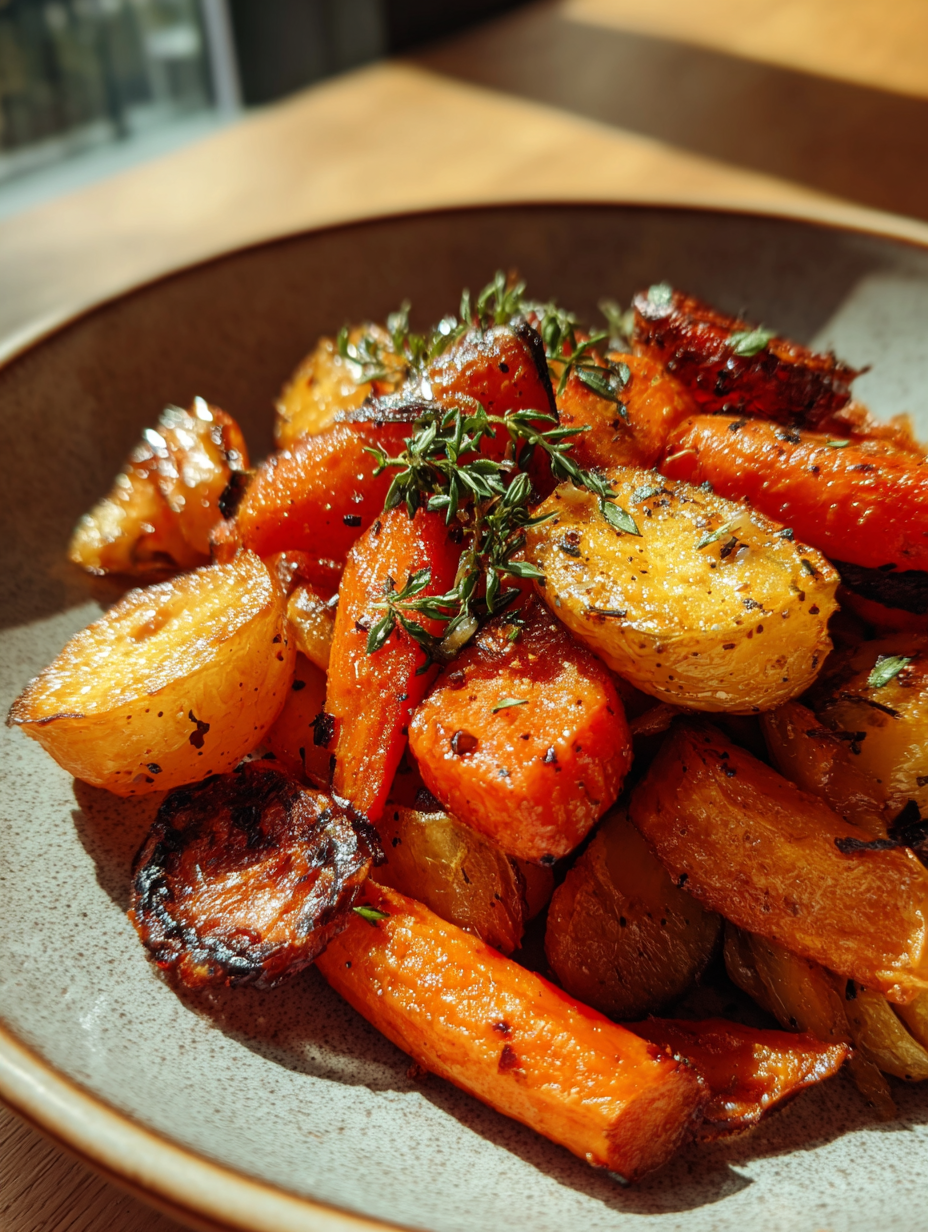
When I pulled the baking sheet from the oven, the colors were breathtaking—vivid oranges, deep greens, and vibrant reds melding together to create a feast for the eyes. I drizzled the warm honey glaze over the tender veggies, and the sticky sweetness clung to them, promising a taste experience that was equally delightful. The crunch of the smoked paprika paired with the caramelized edges of the vegetables created a texture that was both satisfying and delightful to bite into.
This dish quickly became a staple in my home, treasured for its simplicity and ability to impress. It’s versatile enough to accompany any meal yet special enough to stand alone as a star side dish. Each time I prepare it, I’m reminded of that magical evening, filled with laughter, good food, and warm company. Now, let’s dive into how you can recreate this sweet and savory masterpiece in your own kitchen.
—
Why This Recipe Works
The beauty of Caramelized Honey-Glazed Roasted Vegetables lies in the harmonious balance of flavors and textures created through the roasting process. As you roast the vegetables, the heat works its magic, caramelizing their natural sugars and drawing out their inherent sweetness. This technique transforms ordinary veggies into tender, golden bites that are bursting with flavor.
The interplay of the honey and balsamic vinegar in the glaze is essential. The honey lends a luscious sweetness while the balsamic adds a tangy depth, creating a complex flavor profile that keeps your palate engaged. Furthermore, the addition of smoked paprika introduces a subtle smokiness that beautifully contrasts the sweetness, enhancing the overall experience with each bite.
In terms of texture, you’ll notice the crisp-tender crunch of the roasted veggies, which contrasts with the stickiness of the honey glaze. Each vegetable contributes its unique texture; for instance, the carrots maintain a satisfying bite while the red onions soften to a sweet, melt-in-your-mouth delight.
What sets this recipe apart from generic roasted vegetable dishes is its thoughtful combination of ingredients and the layering of flavors. Each element is intentional, ensuring a balanced, delightful result that elevates your meal from ordinary to extraordinary.
—
What Makes It Special
1. Freshness Over Store-Bought: Unlike most store-bought versions, which can lack depth and freshness, making this dish at home allows you to use seasonal vegetables at their peak, ensuring vibrant flavors and textures.
2. Customization: This recipe is incredibly flexible. You can swap in your favorite vegetables or even add a touch of heat with some red pepper flakes. This adaptability means you can tweak the recipe to suit your taste buds or what you have on hand.
3. Healthier Indulgence: With the natural sweetness of honey and a drizzle of olive oil, you’re opting for a healthier alternative to sugary or creamy sauces often found in restaurant dishes. Plus, roasting vegetables retains their nutrients while enhancing their flavor.
4. Elevated Simplicity: The simplicity of this recipe belies its stunning results. It’s easy enough for a weeknight dinner but impressive enough to serve at gatherings, bringing that “wow” factor without demanding hours in the kitchen.
—
Ingredient Breakdown
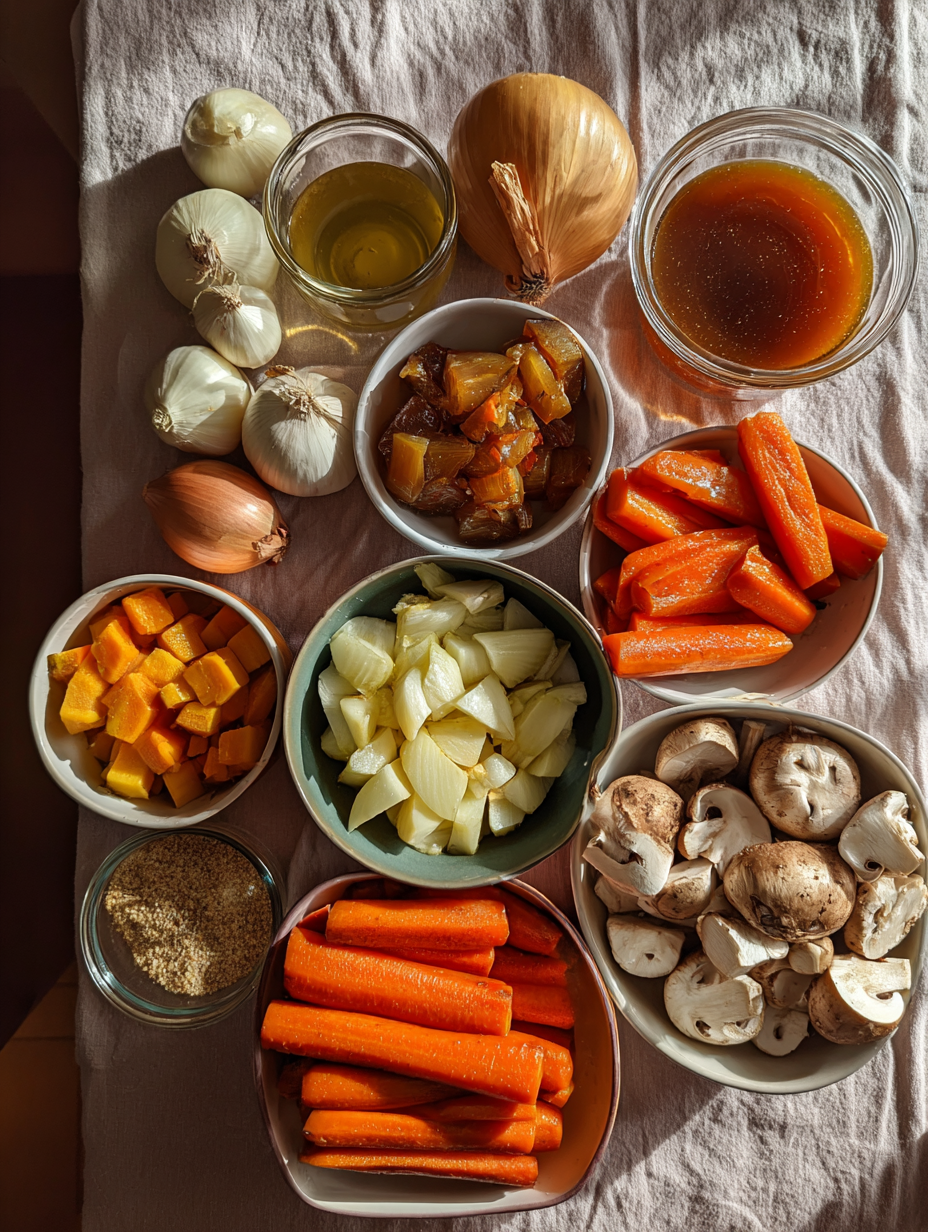
Every ingredient in your Caramelized Honey-Glazed Roasted Vegetables plays a crucial role in achieving the perfect balance of flavors and textures. Here’s a closer look at what you’ll need:
– Carrots (1 cup, peeled and cut into sticks): Carrots bring a natural sweetness and a satisfying crunch. They caramelize beautifully in the oven, enhancing their flavor.
– Zucchini (1 cup, sliced into half-moons): Zucchini contributes a mild flavor and tender texture. When roasted, it becomes soft and absorbs the honey glaze, making each bite juicy.
– Bell Peppers (1 cup, diced): The vibrant colors of bell peppers not only add visual appeal but also a slight sweetness and a refreshing crunch. Mixing colors gives a stunning presentation.
– Red Onion (1 cup, cut into wedges): The sweetness of roasted red onions adds depth to the dish. They soften and caramelize, providing a delightful contrast to the other veggies.
– Honey (2 tablespoons, preferably local or raw): This is the star ingredient! Honey adds a rich, sticky sweetness that enhances the natural flavors of the vegetables.
– Balsamic Vinegar (1 tablespoon): A splash of balsamic brings acidity to the dish, balancing the sweetness of the honey and vegetables, while adding complexity.
– Smoked Paprika (1/2 teaspoon): This spice introduces a subtle smokiness, elevating the dish and providing a warm undertone that complements the sweetness.
– Garlic (3 cloves, minced): Garlic adds aromatic depth and a savory element that rounds out the flavors.
– Olive Oil (2 tablespoons, extra virgin): A drizzle of high-quality olive oil not only helps with roasting but also enhances the overall flavor and mouthfeel of the dish.
– Fresh Thyme (1 teaspoon or 1/2 teaspoon dried): Thyme adds a fragrant, herbaceous note that intertwines beautifully with the roasted vegetables.
– Salt and Pepper: These staples are essential in enhancing the flavors of the vegetables and balancing out the sweetness of the glaze.
Substitutions
– Dairy-Free/Vegan: This recipe is naturally vegan-friendly as it contains no dairy.
– Gluten-Free: All ingredients are gluten-free, making it safe for those with gluten sensitivities.
– Specialty Ingredients: If you don’t have smoked paprika, regular paprika can work, though it won’t have the same depth. Local honey adds unique flavor profiles, so try to source it from nearby farmers’ markets if you can.
—
Equipment Needed
To make your Caramelized Honey-Glazed Roasted Vegetables, you’ll need a few essential tools:
– Large Baking Sheet: A sturdy baking sheet allows for even roasting. Opt for one with a raised edge to prevent spills. If you don’t have one, a large oven-safe pan can work as well.
– Parchment Paper: Lining your baking sheet with parchment paper makes cleanup a breeze and prevents sticking, ensuring your veggies come off easily.
– Mixing Bowl: A large mixing bowl is necessary for tossing your vegetables with oil and spices. Glass or stainless steel works best for easy mixing and visibility.
– Small Saucepan: This is needed for warming the honey glaze. A non-stick or stainless-steel saucepan will help prevent sticking and allow for even heating.
– Spatula or Wooden Spoon: Use this to stir your vegetables as they roast and to mix your glaze. A heat-resistant silicone spatula is a great choice, as it can handle high temperatures.
Optional tools include a chef’s knife for chopping and a cutting board for prep. If you’re in a pinch, you can use a simple kitchen knife and any flat surface as your cutting board.
Having these tools on hand will ensure that your cooking experience is smooth and enjoyable, allowing you to focus on creating this delicious dish.
Step-by-Step Instructions
1. Preheat your oven to 425°F (220°C). This temperature is essential for achieving that perfect caramelization on your vegetables. If your oven has a convection setting, feel free to use it to encourage even cooking. Chef’s Note: Preheating the oven ensures that the vegetables start cooking immediately when placed inside, which helps lock in moisture and flavor.
2. In a large mixing bowl, combine the carrots, zucchini, bell peppers, and red onion. These vegetables not only provide vibrant colors but also different textures that will complement each other beautifully. Drizzle the mixture with 2 tablespoons of extra virgin olive oil. Use your hands to toss the vegetables, ensuring that each piece is evenly coated. You should hear a light sizzle as you mix, indicating that the oil is enveloping the veggies. Chef’s Note: Olive oil not only adds flavor but also assists in the caramelization process by helping the vegetables cook evenly.
3. Season generously with salt, pepper, smoked paprika, and thyme. Use about 1/2 teaspoon of salt and pepper as a starting point, but adjust based on your preference. Toss the mixture again until the seasonings are well-distributed. You want to see a light coating on every piece of vegetable and smell the aromatic herbs. Chef’s Note: The smoked paprika adds a subtle depth of flavor, enhancing the overall taste profile of your dish.
4. Spread the seasoned vegetables in a single layer on your prepared baking sheet. This step is crucial; overcrowding the pan will lead to steaming instead of roasting. Listen for a soft sound as the vegetables hit the pan, and make sure they are not touching. You want air to circulate around each piece to promote caramelization. Chef’s Note: If you have a lot of vegetables, consider using two baking sheets to ensure they roast evenly.
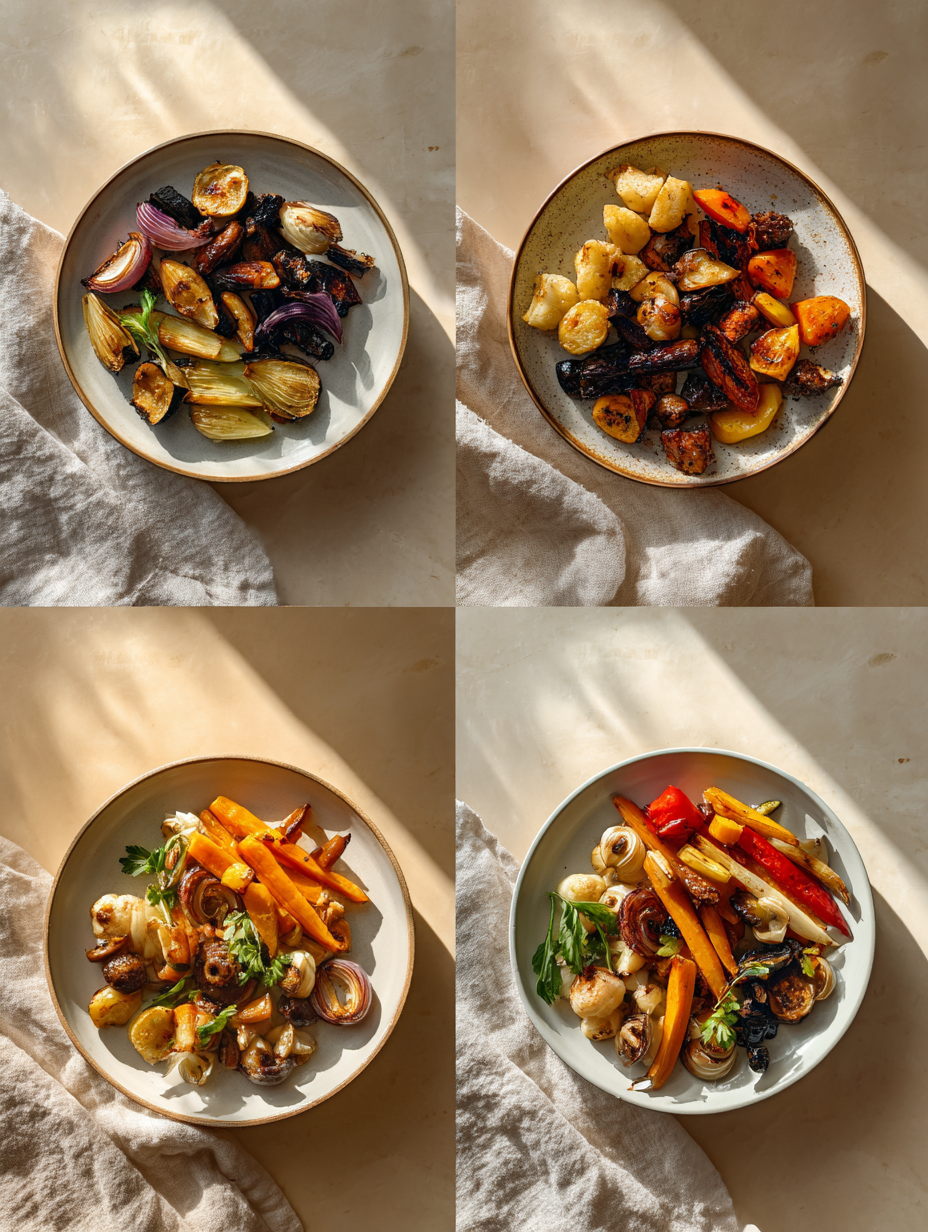
5. Roast in the preheated oven for 20-25 minutes, stirring halfway through. As they cook, you should start to hear a gentle sizzling sound, indicating that they are browning beautifully. Look for the vegetables to become tender and slightly charred at the edges, which adds a delicious depth of flavor. Chef’s Note: Keep an eye on the clock; if they start to look too dark or burn, remove them early.
6. While the vegetables are roasting, make the honey glaze. In a small saucepan over low heat, combine the honey, balsamic vinegar, and minced garlic. Stir continuously for about 2-3 minutes until the mixture is warm and slightly thickened. You want to smell the sweet aroma of the honey mingling with the tanginess of the balsamic vinegar. Chef’s Note: If you let the glaze sit too long, it will become too thick to drizzle, so keep an eye on it.
7. Once the vegetables are roasted, remove them from the oven and drizzle the warm honey glaze over the top. Use a spatula to gently toss the vegetables, ensuring that the glaze coats them evenly. Return to the oven for an additional 5 minutes. You should see the glaze bubbling slightly, creating that lovely caramelized finish on the vegetables. Chef’s Note: If you want extra caramelization, broil them for the last minute, but watch carefully to prevent burning.
8. Remove the vegetables from the oven and let them cool slightly before serving. They should glisten and look inviting. Taste a piece and adjust the seasoning with more salt or pepper if desired. Serving suggestion: These caramelized honey-glazed vegetables pair beautifully with grilled meats or as a standalone dish over a bed of quinoa or rice, offering a burst of color and flavor to your table.
Pro Tips for the Best Results
1. Use a variety of vegetables: For a more visually appealing dish, mix different colors and textures. Consider adding purple carrots, yellow squash, or even parsnips for a unique twist. The broader the variety, the more complex the flavors you’ll experience.
2. Invest in high-quality honey: A raw or local honey will have a richer flavor profile compared to standard supermarket honey. This will enhance the sweetness of the glaze and elevate the overall dish.
3. Cut vegetables evenly: Ensure all your vegetable pieces are similar in size for uniform cooking. This will prevent some pieces from being overcooked while others remain crunchy. Aim for about 1-inch pieces for optimal roasting.
4. Don’t skip the resting time: Allowing the roasted vegetables to sit for a few minutes after baking helps the flavors meld together. This resting period also allows the glaze to set, making each bite even more delicious.
5. Monitor your oven’s temperature: Ovens can vary in temperature accuracy. Use an oven thermometer if possible to ensure you’re roasting at the right heat. This will help you avoid undercooked or overcooked vegetables.
6. Experiment with spices: While smoked paprika is excellent, consider other spices like cumin or curry powder for a different flavor profile. They can add an unexpected twist to your glaze and enhance the taste of your roasted vegetables.
7. Make it ahead: If you’re prepping for a gathering, you can roast the vegetables a few hours in advance and reheat them in the oven just before serving. This method makes hosting stress-free while still delivering warm, delicious vegetables to your guests.
Common Mistakes to Avoid
1. Overcrowding the baking sheet → This leads to steaming instead of roasting, resulting in soggy vegetables. Correct Approach: Always spread the vegetables in a single layer, leaving space between them for air circulation.
2. Not preheating the oven → If you place vegetables in a cold oven, they will cook unevenly and may not achieve that desired caramelization. Correct Approach: Always preheat your oven to the specified temperature before starting.
3. Ignoring the stirring step → Failing to stir the vegetables halfway through can cause some to burn while others remain undercooked. Correct Approach: Set a timer to remind you to stir the vegetables to ensure even roasting.
4. Using low-quality honey → Cheap honey can lack flavor and sweetness, which can dull the dish’s overall taste. Correct Approach: Use high-quality, preferably local, honey for a richer flavor that enhances the glaze.
5. Skipping the seasoning → Vegetables need proper seasoning to bring out their natural flavors. Skipping this step can lead to bland results. Correct Approach: Season liberally with salt, pepper, and spices to elevate the dish.
6. Not tasting before serving → Failing to taste the final dish can result in an unbalanced flavor profile. Correct Approach: Always taste and adjust the seasoning before serving to ensure a delicious result.
7. Not letting the glaze cool → Pouring hot glaze over the vegetables can cause it to slide off instead of adhering properly. Correct Approach: Allow the glaze to cool slightly before drizzling to ensure it sticks to the vegetables.
Creative Variations
1. Seasonal Variation: During the fall, swap out zucchini and bell peppers for butternut squash and Brussels sprouts. The sweetness of the squash and the slight bitterness of the Brussels sprouts create a lovely contrast when roasted and glazed.
2. Dietary-Friendly Version: For a vegan adaptation, replace honey with maple syrup or agave nectar. This keeps the dish sweet while ensuring it aligns with vegan dietary preferences.
3. Gourmet Elevated Version: Upgrade your dish by using heirloom carrots, baby zucchini, and a finishing touch of truffle oil instead of olive oil. The truffle oil will add an earthy aroma, elevating the dish to a restaurant-quality masterpiece.
4. Quick 15-Minute Version: For a speedy weeknight meal, use pre-cut frozen mixed vegetables. Simply roast them for about 15 minutes, following the same glazing process. This saves prep time while still delivering a tasty side dish.
5. Kid-Friendly Version: To cater to children’s tastes, make a sweet and savory version by adding a touch of cinnamon to the honey glaze. This familiar flavor may entice pickier eaters to enjoy their veggies more.
6. International Twist: For an Italian-inspired version, add a tablespoon of pesto to the honey glaze instead of balsamic vinegar. This gives the roasted vegetables a fresh, herbaceous flavor that pairs beautifully with grilled chicken or fish.
Serving Ideas
When it comes to plating your Caramelized Honey-Glazed Roasted Vegetables, you can let your creativity shine. Here are a few stunning ideas to make your dish not just delicious but visually captivating:
1. Rustic Bowl: Serve the vegetables in a shallow, rustic wooden bowl. Sprinkle fresh thyme leaves and a handful of pomegranate seeds for a burst of color and a touch of tartness. The deep hues of the vegetables paired with the vibrant pomegranate will make your dish pop.
2. Elegant Platter: Arrange the roasted vegetables on a large, white oval platter, creating a colorful mosaic. Drizzle extra honey glaze artfully over the top and add a sprinkle of sea salt. Garnish with thinly sliced scallions or chives for a fresh touch. The contrast of the colorful veggies against the white platter makes for an eye-catching centerpiece.
3. Individual Portions: For a more refined dining experience, serve the vegetables in small cast-iron skillets. This not only keeps them warm but also adds a charming, rustic feel. Top each portion with a dollop of herbed yogurt or a sprinkle of crumbled feta cheese for a creamy contrast.
4. Layered in Jars: For a fun twist, layer the roasted vegetables in mason jars. Start with a layer of the caramelized veggies, followed by a layer of quinoa or couscous, and finish with a drizzle of the honey glaze on top. This portable option is perfect for picnics or meal prep and looks delightful.
5. Salad Base: Turn the roasted vegetables into a vibrant salad by serving them over a bed of mixed greens. Add a handful of toasted nuts like almonds or walnuts for crunch and a sprinkle of feta for creaminess. Finish with a squeeze of lemon juice to brighten the flavors, creating a fresh and healthy dish.
What to Serve With
Pairing your Caramelized Honey-Glazed Roasted Vegetables with complementary dishes can elevate your meal experience. Here are some delightful options:
1. Herb-Crusted Chicken: The savory, herbaceous notes of this chicken dish balance beautifully with the sweetness of the honey-glazed vegetables. The crispy texture of the crust offers a satisfying contrast to the tender veggies.
2. Quinoa Pilaf: This fluffy grain dish, accented with dried cranberries and nuts, provides a nutty flavor and chewy texture that pairs well with the soft, caramelized vegetables. Its warmth and heartiness make it a perfect companion.
3. Lentil Soup: A rich lentil soup infused with spices creates a comforting, hearty contrast. The earthiness of the lentils complements the sweetness of the roasted veggies, while the silky broth adds a lovely depth to your meal.
4. Roasted Salmon: The rich, buttery flavor of salmon pairs beautifully with the sweet and savory notes of the vegetables. A squeeze of lemon over the fish will harmonize wonderfully with the honey glaze, enhancing all the flavors on your plate.
5. Sparkling White Wine: A chilled glass of sparkling Sauvignon Blanc or Prosecco can elevate your dining experience. The wine’s crisp acidity cuts through the sweetness of the glaze, refreshing your palate with each sip.
6. Chocolate Mousse: For dessert, a light and airy chocolate mousse is a decadent finish. Its rich, creamy texture contrasts nicely with the sweetness of the vegetables, providing a satisfying end to the meal.
Storage Guide
To keep your Caramelized Honey-Glazed Roasted Vegetables fresh for future meals, proper storage is essential. Here’s how to do it:
– Container Type: Use an airtight container made of glass or high-quality BPA-free plastic. Glass containers are preferable because they help maintain freshness and won’t absorb odors.
– Refrigeration Temperature: Store your roasted vegetables in the refrigerator at a temperature of below 40°F (4°C). This ensures they remain safe to eat and retain their best flavor.
– Shelf Life: Properly stored, these roasted vegetables will keep in the refrigerator for up to three days. Beyond that, the texture may become mushy, and the flavors will deteriorate.
– Signs of Spoilage: Before consuming leftovers, check for any off smells, mold, or an excessively slimy texture. If any of these signs are present, it’s best to discard the food.
– Refreshing Before Serving: To restore freshness, toss the vegetables in a splash of olive oil and a sprinkle of salt before reheating. This will help revive their original flavors and give them a little moisture back.
Freezing Tips
If you want to prepare your Caramelized Honey-Glazed Roasted Vegetables ahead of time or store leftovers long-term, they can freeze well with proper preparation. Here’s how:
– Portioning: Divide the roasted vegetables into single-serving portions. This makes it easier to thaw only what you need later.
– Wrapping Method: Place the portions in airtight freezer bags or containers. Squeeze out as much air as possible before sealing to prevent freezer burn.
– Labeling: Don’t forget to label your containers with the date and contents. This will help you keep track of how long they’ve been in the freezer.
– Freezer Lifespan: When stored properly, these vegetables can last for up to three months in the freezer.
– Quality Changes: While they will retain their flavor, the texture may soften slightly upon thawing. To minimize this, try to freeze them while they are still slightly warm, as this helps maintain their integrity.
– Best Thawing Method: For best results, thaw the vegetables overnight in the refrigerator. If you’re short on time, place the sealed bag under cold running water for about 30 minutes.
Reheating Guide
To enjoy your Caramelized Honey-Glazed Roasted Vegetables at their best, follow these reheating instructions:
– Microwave: Place the vegetables in a microwave-safe dish, cover with a damp paper towel to retain moisture, and heat on medium power for 1-2 minutes, stirring halfway through. This prevents them from drying out.
– Oven: Preheat your oven to 350°F (175°C). Spread the vegetables in a single layer on a baking sheet and warm for about 10-15 minutes. Cover with aluminum foil to keep them from drying out.
– Stovetop: Heat a skillet over medium-low heat and add a splash of water or olive oil. Toss in the vegetables and stir for about 5-7 minutes until heated through. This method helps revive their original texture and flavor.
– Restoring Texture and Flavor: To enhance the taste, consider drizzling a bit more honey glaze or a squeeze of lemon over the vegetables just before serving. This will add freshness and vibrancy.
Nutrition Overview
Each serving of your Caramelized Honey-Glazed Roasted Vegetables comes with a delightful array of nutrients:
– Approximate Nutritional Values:
– Calories: 150
– Protein: 2g
– Carbohydrates: 30g
– Fat: 5g
– Fiber: 5g
– Sugar: 10g
Two standout ingredients are carrots and zucchini. Carrots are rich in beta-carotene, supporting eye health and immune function, while zucchini is low in calories but high in fiber, making it great for digestion. Together, they provide a wonderful combination of flavor and health benefits, making this dish not just delicious but nourishing as well.
Frequently Asked Questions
Q: Can I substitute different vegetables?
A: Absolutely! Feel free to use seasonal vegetables like Brussels sprouts, sweet potatoes, or even asparagus. Adjust the cooking time based on the vegetable’s density; harder vegetables may need a bit longer to roast.
Q: How do I make this dish vegan?
A: Simply replace honey with maple syrup or agave nectar to keep the sweetness while adhering to a vegan diet. The taste will still be delightful!
Q: Can I prep the vegetables in advance?
A: Yes, you can chop and toss the vegetables with the oil and seasonings ahead of time. Store them in the refrigerator for up to a day before roasting.
Q: What can I do with leftover honey glaze?
A: The leftover glaze can be used as a dressing for salads or drizzled over grilled meats or fish. It also makes a great addition to roasted fruits for dessert!
Q: Can I roast these vegetables on a grill instead?
A: Yes, grilling adds a smoky flavor! Use a grill basket or skewers to hold the vegetables and cook them over medium heat, tossing occasionally until tender and caramelized.
Q: How can I adjust the sweetness of the glaze?
A: If you prefer a less sweet glaze, reduce the amount of honey or add a splash more balsamic vinegar for tanginess. Taste as you go to find the right balance.
Q: What kitchen equipment do I need for this recipe?
A: You’ll need a large mixing bowl, a baking sheet, a small saucepan, a spatula for stirring, and a sharp knife for chopping. A baking mat or parchment paper will also be helpful for easy cleanup.
Q: Can I use dried herbs instead of fresh?
A: Yes, dried herbs can be used in place of fresh thyme. However, you’ll need less, about half the amount, as dried herbs are more concentrated in flavor.
Final Thoughts
Creating your Caramelized Honey-Glazed Roasted Vegetables is a culinary adventure that combines simplicity with delightful flavors. Remember, the key tips are to not overcrowd your baking sheet for that perfect caramelization and to adjust the glaze to your taste.
I genuinely hope you feel inspired to bring this dish to your table. Its vibrant colors and mouthwatering aroma will surely impress your family and friends. I can’t wait for you to make it and share your results — trust me, your taste buds will thank you! So, gather your ingredients and let the roasting begin!
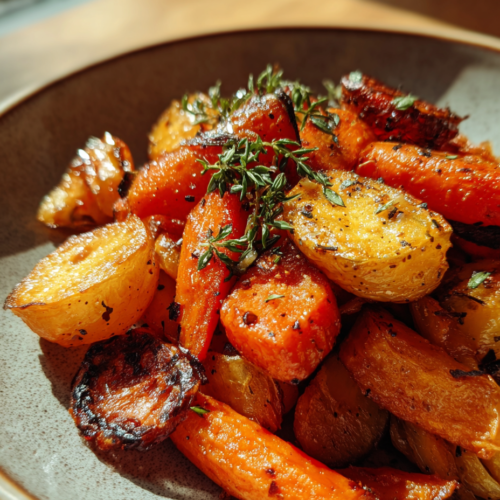
Caramelized Honey-Glazed Roasted Vegetables 🍯🥕
Caramelized Honey-Glazed Roasted Vegetables are a delightful mix of seasonal vegetables roasted to perfection and drizzled with a sweet and sticky honey glaze. This dish offers a wonderful balance of sweetness and savory, making it the perfect side for any meal.
Ingredients
- 1 cup carrots peeled and cut into sticks
- 1 cup zucchini sliced into half-moons
- 1 cup bell peppers diced (mixed colors)
- 1 cup red onion cut into wedges
- 2 tablespoons honey preferably local or raw
- 1 tablespoon balsamic vinegar for added depth
- 1/2 teaspoon smoked paprika for a subtle smokiness
- 3 cloves garlic minced
- 2 tablespoons olive oil extra virgin for flavor
- 1 teaspoon fresh thyme or 1/2 teaspoon dried thyme
- salt and pepper to taste
Instructions
- Preheat your oven to 425°F (220°C). Prepare a large baking sheet by lining it with parchment paper for easy cleanup.
- In a large mixing bowl, combine carrots, zucchini, bell peppers, and red onion. Drizzle with olive oil and sprinkle with salt, pepper, smoked paprika, and thyme. Toss to coat evenly.
- Spread the vegetables in a single layer on the prepared baking sheet. Roast in the preheated oven for 20-25 minutes, stirring halfway through until they are tender and beginning to caramelize.
- In a small saucepan over low heat, combine honey, balsamic vinegar, and minced garlic. Stir continuously for about 2-3 minutes until the mixture is warm and slightly thickened.
- Once the vegetables are roasted, remove them from the oven and drizzle the warm honey glaze over the top. Toss gently to combine and return to the oven for an additional 5 minutes.
- Remove from the oven and let cool slightly before serving. The vegetables should be glossy and caramelized. Adjust seasoning with more salt and pepper if desired.
Notes
Tip 1: For a spicier kick, add a pinch of red pepper flakes to the vegetable mix.
Tip 2: These roasted vegetables can be stored in an airtight container in the refrigerator for up to 3 days.
Variation: Substitute seasonal vegetables like Brussels sprouts or sweet potatoes for a different flavor profile.
Tip 2: These roasted vegetables can be stored in an airtight container in the refrigerator for up to 3 days.
Variation: Substitute seasonal vegetables like Brussels sprouts or sweet potatoes for a different flavor profile.